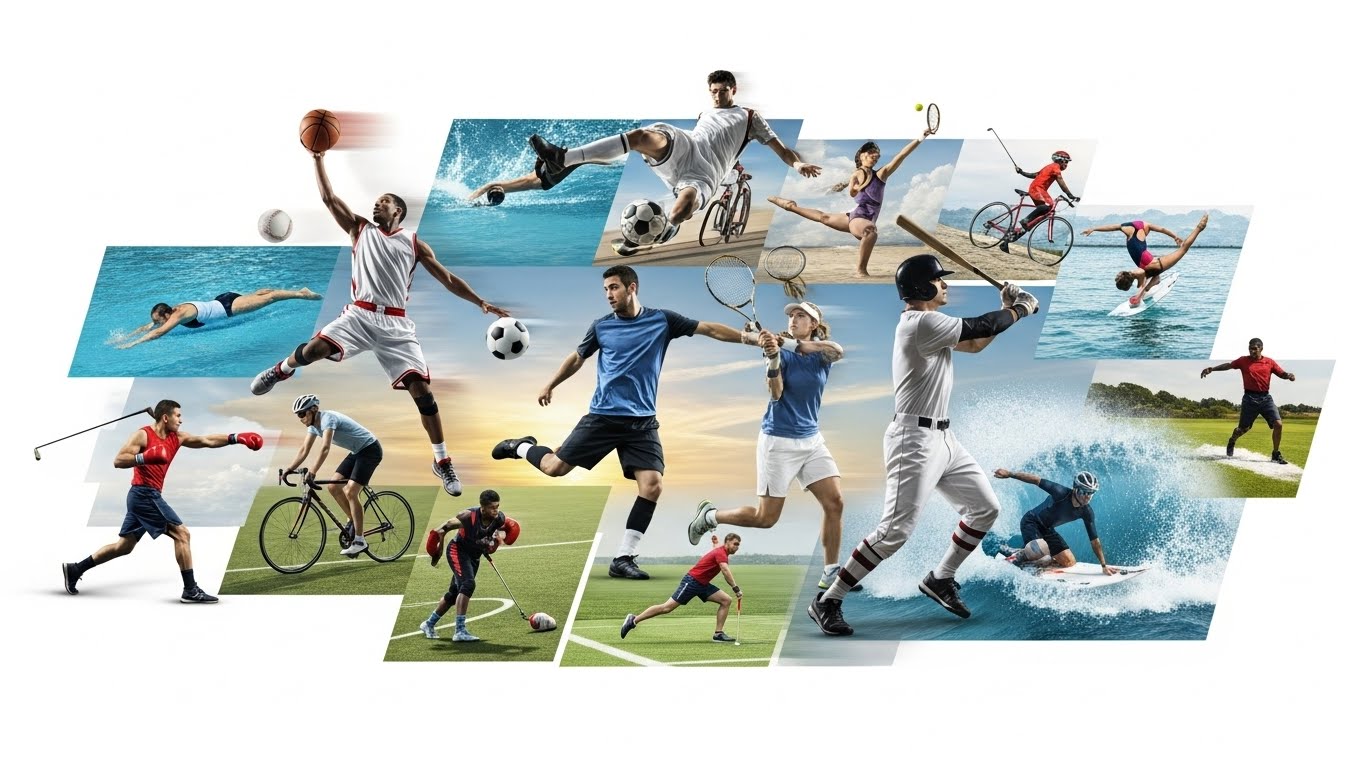
Sports have been a significant part of human culture for centuries, evolving alongside societal, technological, and cultural advancements. What started as simple contests of strength and skill in ancient civilizations has grown into a massive global industry that entertains millions and unites people across the world. From the ancient Olympics to today’s digital esports leagues, the journey of sports is one filled with fascinating transitions and transformations. This blog post will explore the evolution of sports, from their humble beginnings to the sprawling, high-tech spectacles we see today.
1. The Ancient Origins of Sports
The roots of modern sports lie deep within human history, beginning in ancient times when physical contests were seen as ways to test strength, agility, and skill. The earliest recorded instances of sports date back to Ancient Egypt, where people engaged in activities like running, swimming, and wrestling. These early contests were not just for entertainment but also served as rites of passage, training for war, or rituals to honor gods.
The Birth of the Olympic Games
Perhaps one of the most significant milestones in the history of sports was the origin of the Olympic Games in Ancient Greece. Dating back to 776 BCE, the Olympics began as a religious festival held in honor of the Greek god Zeus. Athletes from various Greek city-states gathered at Olympia to compete in running, wrestling, and pentathlon events, among others. The ancient Olympics were a symbol of unity and peace, with a sacred truce declared during the event to allow safe travel for participants.
These games set the standard for competitive sports, and their legacy continues in the modern Olympic Games, which are now a global phenomenon watched by billions.
2. Sports in the Middle Ages and Renaissance
During the Middle Ages, sports took on different forms, often reflecting the feudal and military nature of society. Knights competed in jousting tournaments, archery contests, and other martial activities that were both recreational and practical in training for warfare. Peasant games, often rough and unregulated, also became a staple in the culture of many European regions. These games, including medieval football (which eventually evolved into soccer), were played without formalized rules and were more about the communal spirit than competitive integrity.
Renaissance and the Rebirth of Classical Games
As the Renaissance unfolded, there was a renewed interest in classical culture, and this revival extended to the world of sports. The study of Ancient Greek and Roman texts led to an appreciation for physical prowess and athleticism. This period also saw the introduction of early forms of tennis, fencing, and even the precursor to modern gymnastics. The Renaissance laid the groundwork for more structured and regulated sporting events, as societies began to see sports not just as physical contests but also as a means of cultivating discipline, strategy, and intellectual engagement.
3. The Industrial Revolution and the Rise of Modern Sports
The Industrial Revolution of the 18th and 19th centuries brought about significant changes in all aspects of life, including sports. As cities grew, people had more leisure time and disposable income, which helped fuel the rise of organized sports. The invention of new technologies, such as the printing press and railroads, helped spread sports across the globe. The formalization of rules and the establishment of governing bodies became essential during this period, marking the birth of modern sport.
Football, Cricket, and the Birth of Global Sports
Sports like football (soccer), cricket, and rugby began to take shape during the 19th century. The establishment of formalized rules for these games, often spearheaded by British clubs and schools, turned them into structured competitions. The formation of national and international sporting bodies, such as the International Football Association Board (IFAB) in 1886, laid the foundation for the worldwide competitions we see today, including the FIFA World Cup and the ICC Cricket World Cup.
These sports grew in popularity due to increased global communication and travel, with international competitions helping to foster national pride and unity.
4. The 20th Century: Commercialization and Globalization of Sports
The 20th century marked a dramatic shift in the way sports were consumed, largely due to advancements in mass media. The advent of radio, television, and, later, the internet made sports more accessible to a global audience, turning athletes into household names and games into international events.
The Rise of American Sports
In the United States, sports such as baseball, American football, and basketball became synonymous with American culture. The National Football League (NFL), Major League Baseball (MLB), and the National Basketball Association (NBA) grew in prominence and helped shape the sports landscape in North America. The creation of national sports leagues and franchises, alongside the development of massive stadiums and arenas, allowed for the commercialization of sports on an unprecedented scale.
The Globalization of the Olympic Games
The 20th century also saw the evolution of the Olympic Games into a global spectacle. With the inclusion of new sports and the participation of nations from around the world, the Olympics became a celebration of international unity. The Summer and Winter Olympics evolved into mega-events that combine athletic achievement with national pride, politics, and cultural exchange.
Television broadcasting made the Olympics a mass event, with millions watching opening ceremonies, individual events, and closing ceremonies. The growth of corporate sponsorships and endorsements helped fuel the monetary side of the games, giving rise to the “commercialization of sports” that continues to this day.
5. The Digital Revolution: Sports in the 21st Century
The digital age brought about yet another transformative shift in sports, further expanding the reach and influence of athletics in global culture. Digital media, mobile apps, and social media platforms have revolutionized the way fans interact with their favorite sports and athletes. Platforms like YouTube, Twitter, Instagram, and TikTok have given fans instant access to live games, behind-the-scenes content, and direct interaction with athletes.
The Emergence of Esports
One of the most significant developments in sports today is the rise of esports. Competitive video gaming has grown into a billion-dollar industry, with professional players, coaches, and teams now treated like traditional athletes. Games like “League of Legends,” “Fortnite,” and “Dota 2” have become platforms for global competitions, and esports tournaments are now held in arenas with thousands of live spectators and millions of online viewers.
Data Analytics and the Modern Athlete
Another noteworthy shift in modern sports is the increasing use of data analytics and sports science. Athletes are now more scientifically trained than ever before, with data-driven insights informing everything from nutrition and physical conditioning to gameplay strategies. Wearable technology, like fitness trackers and smart clothing, allows teams and individual athletes to track performance in real time, giving them a competitive edge.
Social Media and Athlete Activism
Social media has also given athletes a powerful platform to speak out on social and political issues. Athletes like Colin Kaepernick, Naomi Osaka, and LeBron James have used their fame to address matters of racial injustice, inequality, and mental health. Social media has amplified the voices of athletes, enabling them to transcend the boundaries of their respective sports and become influencers in the global conversation.
6. The Future of Sports: Virtual Reality and Beyond
Looking ahead, the future of sports seems increasingly intertwined with emerging technologies. Virtual reality (VR) and augmented reality (AR) have already begun to reshape the way fans experience sports, with VR allowing for immersive viewing experiences that make fans feel as though they are present in the stadium. These technologies will likely continue to evolve, creating new opportunities for virtual leagues and simulations.
Moreover, advancements in artificial intelligence (AI) could change the way sports are played, coached, and officiated. Automated referees, AI-driven training programs, and smart stadiums equipped with interactive technology could become the norm in the years to come.
Conclusion: The Unstoppable Growth of Sports
Sports have come a long way since the days of ancient rituals and local competitions. Today, they are a global phenomenon that not only entertains but also unites people, promotes health and wellness, and serves as a platform for social change. The journey from humble beginnings to high-tech spectacles is a testament to the adaptability and enduring appeal of human physical and mental prowess.
As technology continues to advance, the future of sports will undoubtedly be shaped by new innovations, but the core values of competition, unity, and human achievement will remain timeless. The evolution of sports will continue to captivate audiences around the world, pushing the boundaries of what it means to be an athlete and a fan.