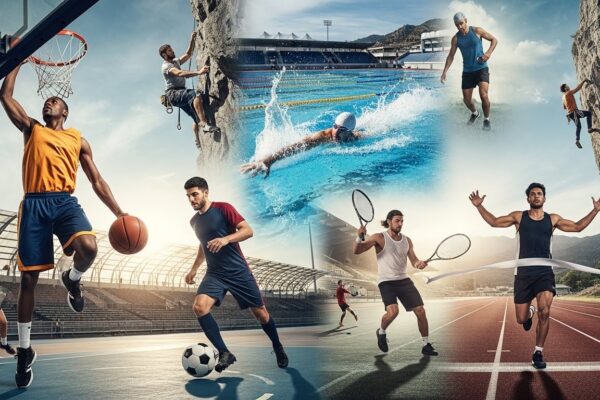

Sports have long been a universal language, transcending boundaries, cultures, and even generations. Whether it’s the roar of the crowd at a football game or the focused energy of an athlete on the track, sports have a unique way of bringing people together. However, as the world rapidly evolves, so too does the world of sports. Technology, diversity, and a shift in how we approach performance and competition are shaping a new era in athletics. From artificial intelligence to new training methods, from the rise of esports to more inclusive participation, sports are not only changing—they’re advancing in ways previously unimaginable. In this blog post, we’ll explore how the landscape of sports is transforming, focusing on technology’s role, the importance of diversity, and the future of athletic performance.
Technology’s Impact on Sports: Innovation at Every Level
The integration of technology in sports is one of the most significant changes in the last few decades. From the early days of digital scoreboards to today’s cutting-edge virtual reality (VR) and wearable devices, technology is transforming how athletes train, how games are played, and how fans experience sports.
Performance Monitoring and Wearables
One of the most notable impacts of technology is in the realm of athlete performance. Wearable technology, such as fitness trackers, heart rate monitors, and smart shoes, are now a regular part of an athlete’s training routine. These devices collect data in real-time, tracking metrics such as heart rate, calorie burn, distance run, sleep patterns, and even muscle fatigue. This information is then analyzed to help athletes optimize their training, monitor recovery times, and reduce the risk of injuries.
For example, in sports like football, basketball, and soccer, sensors embedded in uniforms track player movements and performance during games. This data is invaluable for coaches and analysts, providing insights into a player’s speed, agility, and endurance on the field. Coaches can use this data to tweak strategies, improve team dynamics, and give personalized advice to each athlete based on the numbers. For athletes, this personalized approach leads to more effective training and enhanced performance.
Artificial Intelligence and Analytics
Artificial intelligence (AI) has also started playing a major role in sports analytics. Data analysis is helping coaches and teams make more informed decisions by identifying patterns, weaknesses, and opportunities. AI tools are used to analyze everything from player statistics to opponent behavior and even fan engagement.
In sports like basketball, teams use AI to study the effectiveness of different plays, player positioning, and shooting angles. In soccer, AI is used to analyze a player’s movements in relation to the team’s strategy, allowing managers to devise more effective tactics. Similarly, AI-driven systems help identify young talent by assessing their performance across various leagues and competitions, often picking out potential stars before they even make it onto the radar of traditional scouts.
The Role of Virtual Reality in Training
In addition to wearable tech and AI, virtual reality (VR) is making its mark in sports training. VR allows athletes to experience simulations of real-life game situations without the physical demands. In sports like basketball, soccer, and baseball, athletes can virtually experience high-pressure moments such as taking a free throw with seconds remaining or attempting a penalty kick in front of thousands of fans.
For professional sports teams, VR is used to help players visualize different game scenarios, improving decision-making and cognitive abilities. For younger athletes, VR provides a safe, controlled environment where they can practice skills and techniques without the risk of injury.
Esports: The New Frontier of Competition
While traditional sports remain an indelible part of the global landscape, the rise of esports has created an entirely new avenue for competition and fan engagement. Esports, or competitive video gaming, has exploded in popularity over the last decade, becoming a billion-dollar industry in its own right.
The Growing Popularity of Esports
Esports competitions, often streamed on platforms like Twitch and YouTube, have massive viewership, rivaling that of traditional sports. Games like League of Legends, Fortnite, and Counter-Strike: Global Offensive draw millions of viewers and participants worldwide, creating a new category of celebrity athletes in the digital space. Esports tournaments often feature prize pools reaching millions of dollars, attracting the best players from across the globe.
For fans, esports provides an interactive and immersive experience. Viewers can watch matches live, follow their favorite players, and even participate in virtual fan communities. The competitive nature of esports, combined with its accessibility, has made it especially appealing to younger audiences, many of whom might not otherwise engage with traditional sports.
The Future of Esports and its Integration with Traditional Sports
What’s most exciting about esports is its crossover with traditional sports. Many professional sports teams have embraced esports by creating their own teams or investing in esports leagues. For instance, major soccer clubs like Paris Saint-Germain and Manchester City have esports teams that compete in popular games like FIFA and Rocket League. This synergy between traditional and digital competition suggests that esports could soon be considered as much a part of the sports ecosystem as the games themselves.
Esports is also breaking down barriers related to age, gender, and physical ability. Unlike traditional sports, where physical prowess often determines success, esports allows anyone with the necessary skills and strategy to compete. This creates an inclusive environment where talent is the primary measure of success, regardless of the player’s background.
Diversity and Inclusion: A Changing Face in Sports
As society continues to evolve, so does the world of sports. Increasingly, there is a focus on promoting diversity and inclusion, ensuring that sports are accessible to everyone, regardless of race, gender, socioeconomic background, or disability. The push for more inclusive participation has already yielded substantial progress, particularly for women and marginalized groups in sports.
Women in Sports
Historically, women have been underrepresented in sports, with limited opportunities for professional competition. However, in recent years, there has been a growing push for equality. Women’s sports are receiving more media attention, and organizations are committing to providing equal pay and resources for female athletes. Female athletes like Serena Williams, Simone Biles, and Megan Rapinoe have become global icons, breaking down barriers and inspiring young girls to pursue sports at the highest levels.
Moreover, women’s sports leagues, such as the Women’s National Basketball Association (WNBA) and the National Women’s Soccer League (NWSL), are seeing growth in both talent and viewership. The visibility and success of female athletes are creating a more inclusive sports environment and promoting equal opportunities across the board.
Inclusive Sports for All Abilities
Another important area of focus is the increasing visibility of adaptive and para-sports. The Paralympic Games, Special Olympics, and other adaptive sports programs have helped to provide athletes with disabilities a platform to showcase their talent. These events have highlighted the abilities of individuals who might otherwise be overlooked, promoting a more inclusive view of athleticism that extends beyond physical limitations.
As awareness continues to grow, adaptive sports are receiving more attention, funding, and opportunities for athletes with disabilities to compete at the highest level. The integration of adaptive technologies, such as advanced prosthetics and wheelchairs designed for specific sports, has further enabled athletes with disabilities to push the boundaries of performance.
LGBTQ+ Representation
Another area of increasing importance is the representation of LGBTQ+ athletes in professional sports. Athletes like Billie Jean King, Michael Sam, and Jason Collins have paved the way for greater acceptance of sexual orientation and gender identity in sports. Public figures coming out and being supported by their teams and fans has helped break down prejudices and stereotypes surrounding LGBTQ+ participation.
Sports organizations and teams are also working to create safer spaces for LGBTQ+ athletes by implementing inclusive policies, promoting diversity, and challenging discriminatory practices. As society becomes more accepting, the sports world is also learning to embrace athletes from all walks of life, reinforcing the idea that talent and passion are what matter most, not who someone loves or how they identify.
The Evolution of Athlete Training: Data and Science Driving Performance
With the increasing reliance on technology, the way athletes train has undergone a revolutionary shift. Gone are the days of simply following a generic training plan—today, athletes benefit from highly specialized, data-driven approaches to improve performance.
Training with Data Analytics
Data analytics has taken over training programs, with advanced metrics and performance analysis becoming a key part of athletic development. For example, in sports like football and basketball, coaches use video analysis tools to study a player’s movements, technique, and game situations. This allows them to identify areas for improvement and create targeted training programs for individual players.
The use of biomechanics, physiology, and nutrition science also plays a role in maximizing performance. Personalized diet plans, sleep monitoring, and recovery techniques are now considered essential parts of an athlete’s routine. With the use of tools like cryotherapy, infrared saunas, and electrostimulation devices, athletes are better equipped to recover faster, enhance muscle growth, and stay injury-free.
Mental Conditioning and Sports Psychology
Training is no longer just about physical preparation—it’s also about mental conditioning. Sports psychologists work with athletes to help them handle stress, manage pressure, and develop mental resilience. Visualization techniques, mindfulness, and cognitive training are becoming integral parts of modern athletic preparation.
The role of mental conditioning in sports has gained significant importance, especially as the psychological demands of elite competition become more intense. This shift in focus has helped athletes perform at their best even under high-stress situations, whether it’s taking a penalty kick in front of thousands of fans or playing in a championship game.
Conclusion: The Changing Face of Sports
The world of sports is undergoing a profound transformation, driven by technological innovations, a growing emphasis on diversity and inclusion, and evolving approaches to performance. From the rise of esports to the increasing presence of women and LGBTQ+ athletes in professional sports, the face of athletics is changing in ways that will make sports more exciting, accessible, and representative of society as a whole.