
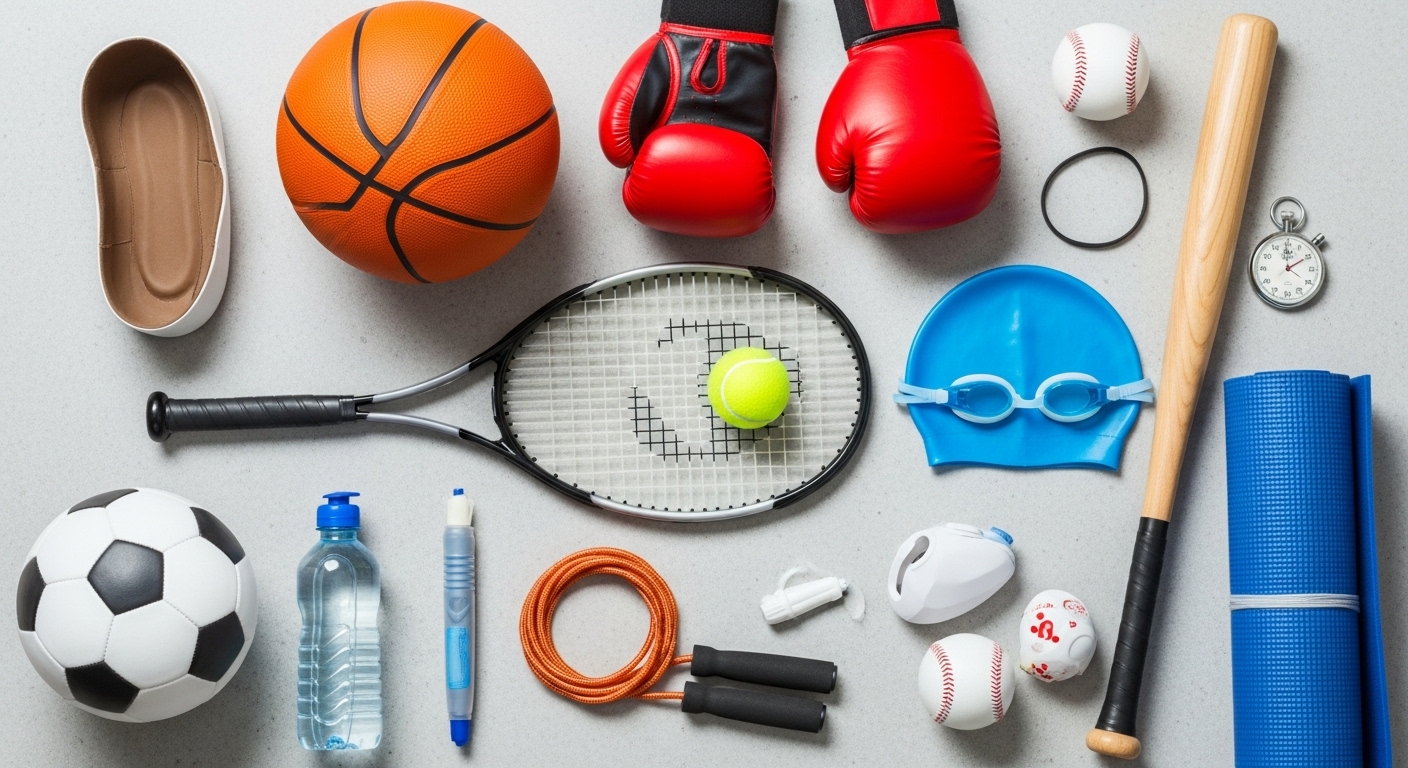
The story of sport is not only the story of athletes and competition but also of the tools that have made those competitions possible. From the earliest days of human civilization, people have sought ways to test their strength, speed, and skill, and in doing so they have created equipment that has evolved with time, technology, and culture. The progression of sports equipment is a reflection of human ingenuity, and each innovation has not only transformed the way games are played but also redefined the limits of human performance.
In the earliest forms of sport, equipment was rudimentary and often drawn directly from nature. Ancient civilizations crafted balls from animal bladders, leather, or stitched cloth. The Mayans and Aztecs played their versions of ball games with heavy rubber balls, some weighing more than a modern bowling ball, demanding incredible strength and agility. Early Olympic athletes in Greece competed barefoot or with the simplest of sandals, throwing javelins made of wood and wrestling without any protective gear. These primitive tools highlight the raw essence of sport, where the emphasis was not on technology but on sheer physicality and human spirit.
As societies advanced, so too did their approach to equipment. Medieval Europe saw the rise of jousting and fencing, where armor and weapons had to be specifically designed not just for combat but for sport. Archery became a competitive discipline, with bows crafted from yew wood, evolving over centuries into finely tuned instruments capable of incredible accuracy. In Asia, martial arts incorporated wooden swords, staffs, and protective padding that allowed practitioners to train safely without injury while still preserving the essence of combat. Every civilization left behind traces of how sport and equipment intertwined with daily life, culture, and technological progress.
The industrial revolution marked one of the most significant turning points in the evolution of sports equipment. The mass production of materials such as rubber, leather, and steel made it possible to standardize equipment and expand the reach of organized sport. The introduction of vulcanized rubber in the nineteenth century changed everything from tennis balls to bicycle tires. Baseballs became tightly wound and covered with consistent materials, allowing pitchers to hone their craft and hitters to showcase power in a fairer contest. Footballs became more uniform, shifting from the misshapen leather bladders of the early days to the iconic oval shape recognized today. Bicycles, once awkward and dangerous, were fitted with durable rubber tires that allowed cycling to grow into a global phenomenon.
The twentieth century brought about a technological explosion in sports equipment, forever altering the possibilities for athletes. The development of synthetic materials such as nylon, fiberglass, and carbon fiber revolutionized nearly every sport. Tennis rackets transitioned from heavy wooden frames to lightweight yet powerful graphite constructions, allowing players to generate more spin, speed, and control than ever before. Golf clubs evolved from persimmon wood heads to titanium and composite designs, enabling players to drive the ball farther and more accurately. In athletics, the introduction of spiked running shoes and synthetic track surfaces allowed sprinters to shave precious fractions of a second off world records. Even the simple design of swimsuits underwent radical changes, culminating in the full-body polyurethane suits of the late 2000s that were so effective at reducing drag they were eventually banned to preserve fairness.
Protective equipment also advanced dramatically over the last century, safeguarding athletes and prolonging careers. Early versions of football helmets were made of leather and provided little more than a symbolic layer of protection, but by the mid twentieth century they had transformed into hardened plastic shells lined with cushioning, and modern innovations now include impact sensors to detect concussions. Ice hockey players once braved the rink without helmets or face masks, but today they wear gear engineered to absorb some of the most violent collisions in sport. In cricket, the introduction of helmets in the 1970s was initially resisted but has since become indispensable, ensuring batsmen can face fast bowlers without catastrophic risk. These advancements reflect the growing recognition that the safety of athletes is as vital as their performance.
The evolution of sports equipment is not solely about performance or safety, but also about accessibility. Basketball was once played with peach baskets and soccer with balls too costly for many communities, but mass production and global distribution have made equipment more affordable and accessible. This democratization of sport has allowed it to flourish across continents, giving rise to global icons who may never have had the chance without the right tools. Accessibility has also extended to athletes with disabilities, as adaptive sports equipment such as lightweight racing wheelchairs, prosthetic running blades, and specialized sleds for hockey have opened the door for Paralympians to inspire the world with their performances.
In the modern era, technology has pushed sports equipment into entirely new dimensions. Wearable devices embedded in shoes, jerseys, and even balls now track data in real time, offering insights into performance that were unimaginable a few decades ago. Smart basketballs can record the arc and rotation of a shot, soccer boots can measure sprint speed and kicking power, and golf simulators allow players to analyze every aspect of their swing. Virtual reality training tools allow athletes to practice in simulated environments, while motion capture suits break down body mechanics with scientific precision. Equipment has become as much about data and analysis as about physical function.
One of the most fascinating aspects of this evolution is the ongoing debate over fairness and the boundaries of technology. When Kenyan-born runner Eliud Kipchoge broke the two-hour marathon barrier in 2019, he did so wearing specially designed Nike shoes that featured carbon plates and responsive foam to reduce energy loss. The achievement was heralded as historic, yet it also reignited debates about whether such innovations give athletes unfair advantages. Similarly, in swimming, the high-tech suits that produced a wave of record-breaking performances were eventually deemed too advantageous and banned. These debates remind us that while equipment can enhance human performance, there must always be a balance to preserve the integrity of competition.
The aesthetic design of sports equipment has also evolved, reflecting fashion, identity, and branding. Jerseys and uniforms have transformed from purely functional attire into symbols of pride, community, and global recognition. The colors of a football kit or the design of a basketball sneaker are now part of global culture, worn not just by athletes but by fans everywhere. The sneaker industry, in particular, has become a cultural powerhouse, with signature shoes designed for players like Michael Jordan, LeBron James, and Kobe Bryant transcending sport to become icons of style. Equipment has thus become a bridge between athletes and fans, connecting the performance on the field with the identities we carry off it.
Looking ahead, the evolution of sports equipment shows no sign of slowing down. Advances in nanotechnology, artificial intelligence, and sustainable materials are already shaping prototypes that may define the future. Lightweight but ultra-strong materials could push performance further, while AI-driven feedback in equipment may guide athletes to optimal performance in real time. Sustainability is also becoming a key factor, with manufacturers developing eco-friendly equipment that reduces waste and environmental impact. The future of sports equipment will likely be defined not just by performance enhancement but by responsibility to the planet and inclusivity for athletes of all backgrounds.
The journey from animal bladders to smart balls, from leather helmets to sensor-equipped gear, and from wooden rackets to carbon-fiber masterpieces tells the story of humanity itself. It is a story of creativity, persistence, and the endless pursuit of improvement. Sports equipment has always been more than tools; it has been the medium through which human beings test their limits, protect their bodies, and connect with one another. Every innovation carries within it the echoes of the past and the promise of the future, ensuring that as sport continues to evolve, so too will the equipment that makes it possible.