
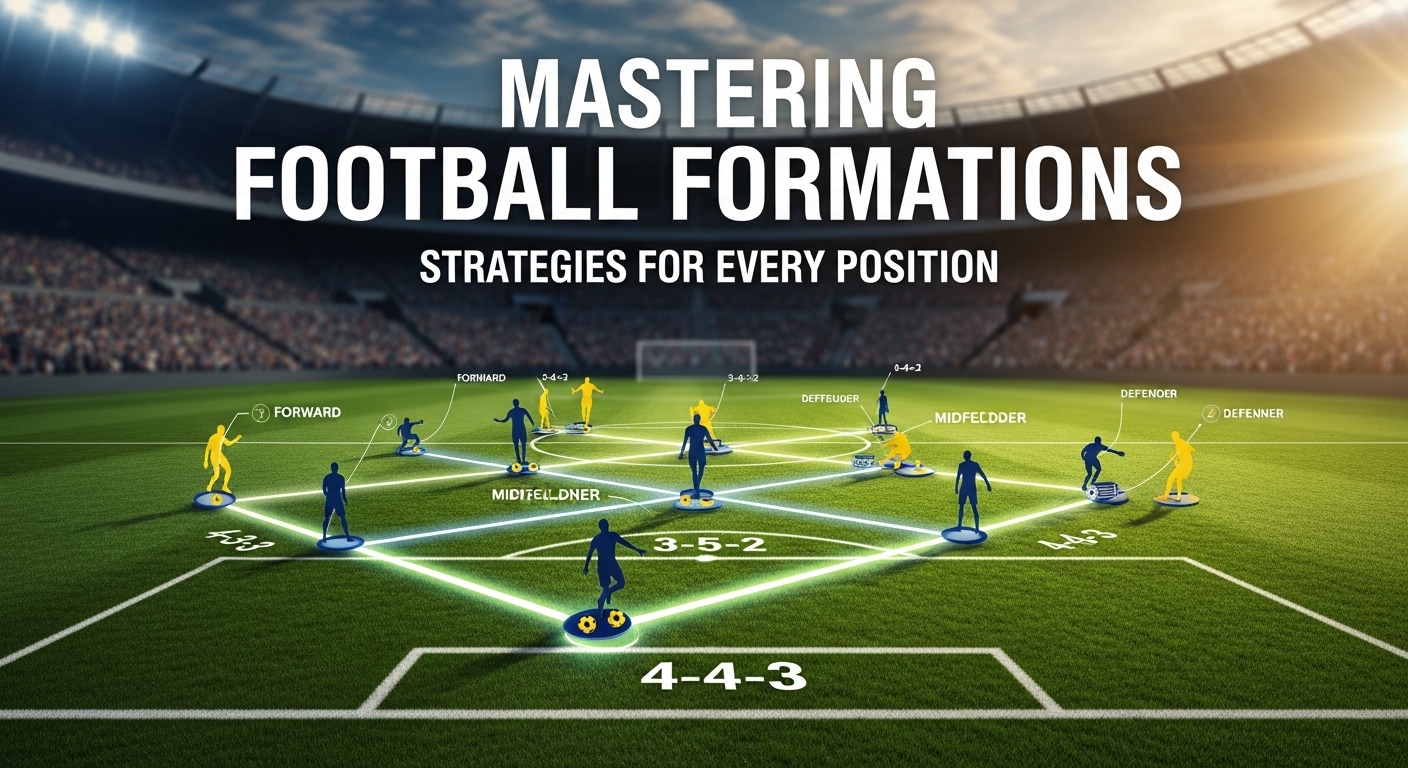
Football, often called the beautiful game, is as much about tactics and strategy as it is about skill and athleticism. One of the key elements that can shape the outcome of any match is the formation a team chooses to deploy. Understanding football formations and how they influence the roles of every position on the field is essential for players, coaches, and fans alike.
Why Formations Matter
Formations define the arrangement of players on the pitch, balancing defense, midfield, and attack. They determine how a team controls space, presses opponents, and creates scoring opportunities. A well-chosen formation maximizes the strengths of individual players while covering weaknesses.
Common Football Formations and Their Strategies
1. 4-4-2 Formation
The classic 4-4-2 features four defenders, four midfielders, and two forwards. This balanced setup is great for teams that want stability and flexibility. Defenders hold a solid line, midfielders support both defense and attack, and two forwards focus on scoring.
- Defenders: Maintain a compact backline with fullbacks occasionally supporting wide attacks.
- Midfielders: Often play flat across the pitch, responsible for both defending and delivering crosses or through balls.
- Forwards: Work in tandem to stretch the defense, with one often dropping deeper to link play.
2. 4-3-3 Formation
This formation emphasizes attacking football with three forwards, three midfielders, and four defenders. It suits teams wanting to dominate possession and press high.
- Defenders: Center-backs focus on stopping attacks, while fullbacks push forward to provide width.
- Midfielders: One acts as a defensive anchor, while the other two advance to support attacks.
- Forwards: Usually includes a central striker and two wingers who cut inside or hug the touchline.
3. 3-5-2 Formation
Featuring three central defenders, five midfielders, and two forwards, this formation strengthens the midfield, allowing control over the game’s tempo.
- Defenders: Three central defenders must be disciplined and capable of covering wide spaces.
- Midfielders: Wingbacks play a crucial role, providing width both in defense and attack.
- Forwards: Two strikers work closely, creating chances and pressing the opponent’s defense.
Position-Specific Strategies in Formations
Each position on the field has unique responsibilities depending on the formation:
- Goalkeeper: The last line of defense, goalkeepers must communicate effectively, organize the defense, and often initiate attacks with precise distribution.
- Defenders: In formations with four at the back, fullbacks are expected to support wide attacks and recover quickly. In three-man defenses, center-backs cover wider areas and often sweep behind teammates.
- Midfielders: Their role varies greatly. Defensive midfielders shield the defense, central midfielders dictate pace, and attacking midfielders create scoring chances.
- Forwards: Strikers must adapt to formation demands. In two-forward systems, one may act as a target man while the other exploits space. In three-forward setups, wingers focus on pace and dribbling to break defenses.
Adapting Formations During the Game
Mastering formations is not just about the starting lineup but also about flexibility. Coaches often switch formations mid-game to respond to opponents’ tactics or changes in momentum. Players who understand their roles across formations can transition smoothly, maintaining team cohesion.
Final Thoughts
Mastering football formations unlocks a deeper appreciation of the game’s tactical side. Each formation brings its own set of strategies that impact how every player performs their role. Whether you’re a player looking to improve your understanding or a fan wanting insight into match dynamics, grasping formations is fundamental. The art of football lies in how teams adapt, communicate, and execute these strategies on the pitch to outsmart their rivals and claim victory.